01 · FINANCE
Accounting & Financial Management
Bookkeeping, financial statements, month-end reporting, cash-flow management and practical finance support for growing businesses.
Explore finance services ↗We bring together finance and accounting, business advisory, education and training, and digital solutions to help businesses, professionals and learners make clearer decisions and work more effectively.
Explore financial reporting, useful accounting tools and learning resources designed to make accounting more practical.

Turn accounting information into structured financial statements with the Financial Statement Generator.
Explore the generator
Use practical calculators and browser-based utilities for everyday accounting and finance tasks.
Explore all tools
Build your understanding with accounting explanations, study resources and practical learning content.
Browse learning resourcesA connected range of finance, education and technology services.
Bookkeeping, financial statements, month-end reporting, cash-flow management and practical finance support for growing businesses.
Explore finance services ↗Process reviews, inventory controls, cost analysis, budgeting and actionable insights to strengthen business performance.
Explore advisory ↗Exam-focused teaching, practical accounting explanations and learning resources for ACCA, CA and accounting students.
Teaching and experience ↗Practical use of AI and automation to reduce repetitive work, organise information and improve everyday business workflows.
Discuss an automation project ↗Responsive websites, content management and search-friendly foundations for professionals and small businesses.
Explore digital services ↗Useful browser-based accounting and productivity tools, including PDF workflows and practical finance calculators.
Explore available tools ↗Practical support across finance, business improvement, education and digital solutions.
Bookkeeping, reconciliations, financial statements, monthly reporting and business finance support.

Internal control reviews, cost and profitability analysis, inventory checks, budgeting and reporting systems.

ACCA and accounting lessons, practical accounting training, short courses and business finance workshops.

Business websites, website maintenance, SEO support and practical digital accounting solutions, including HisabSutra.
Practical notes on controls, IFRS, and teaching accounting.
Discover 10 practical ACCA exam preparation strategies, from study planning and question practice to time management and exam technique.
Read the Post →Learn what ACCA Financial Accounting covers, including double-entry bookkeeping, financial statements, trial balance and exam preparation tips for students in Nepal.
Read the Post →ACCA Rulebook Nepal 2026: Rules, Ethics & Regulations | Understand the ACCA Rulebook in Nepal, including student regulations, membership rules, professional ethics, exam conduct and official ACCA resources.
Read the Post →Convert Bikram Sambat and English dates instantly. Supports B.S. 2000–2090.
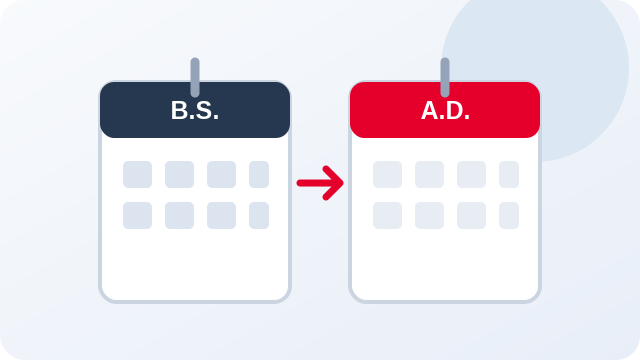
Supports BS 2000–2090 (AD 1943–2034). Switch direction below.
Clear, practical answers for students and professionals comparing accounting concepts, ACCA, Nepal CA and other finance qualifications.
While you're here — latest finance headlines
Start with the concepts behind financial statements, bookkeeping, reporting and business decisions.
Accounting is the process of identifying, measuring, recording and communicating financial information so that users can make informed decisions. It turns business transactions into useful reports about performance, financial position and cash flows.
Accounting usually refers to the processes and techniques used to record, classify, analyse and report financial information. Accountancy is the broader discipline and profession built around those activities, including professional judgement, assurance, taxation, advisory work and ethical responsibilities. In everyday use, the terms often overlap.
Common branches include financial accounting (external reporting), management accounting (internal planning and decisions), cost accounting (measuring and controlling costs), tax accounting, auditing and assurance, and government or public-sector accounting. The boundaries can overlap in practice.
Bookkeeping focuses on the systematic recording and organisation of transactions, such as sales, purchases, receipts and payments. Accounting includes bookkeeping but goes further: adjusting and analysing records, preparing financial statements, interpreting results and supporting decisions.
The main financial statements are the statement of financial position (assets, liabilities and equity), statement of profit or loss and other comprehensive income (income and expenses), statement of changes in equity, and statement of cash flows. Notes provide important explanations and accounting-policy details.
Financial accounting primarily produces general-purpose reports for external users such as investors, lenders and regulators, usually under an applicable reporting framework. Management accounting provides more detailed, timely and often forward-looking information to managers for budgeting, pricing, performance evaluation and operational decisions.
Under the cash basis, transactions are generally recorded when cash is received or paid. Under the accrual basis, income is recognised when earned and expenses when incurred, subject to the applicable accounting requirements, even if cash moves at a different time. Accrual accounting gives a fuller picture of performance and obligations.
IFRS Accounting Standards are standards issued by the International Accounting Standards Board (IASB). The collection includes newer IFRS standards and earlier International Accounting Standards (IAS) that remain in force unless replaced or withdrawn. The standards aim to improve consistency and comparability in financial reporting.
Accounting prepares and communicates financial information. An audit is an independent examination of financial statements to obtain reasonable assurance about whether they are free from material misstatement and to express an audit opinion. An audit does not guarantee that every error or fraud will be detected.
The fundamental accounting equation is Assets = Liabilities + Equity. It expresses the relationship between the resources controlled by an entity and the claims against those resources. Every correctly recorded transaction keeps the equation in balance.
Profit is measured under accrual accounting and includes income earned and expenses incurred during a period. Cash flow tracks actual cash receipts and payments. A profitable business can still face cash shortages because of slow customer collections, inventory investment, debt repayments or capital expenditure.
Explore ACCA entry, exams, exemptions, membership, practical experience and career pathways.
ACCA stands for the Association of Chartered Certified Accountants, a global professional accountancy body. The ACCA Qualification is designed to develop technical, ethical and professional capabilities for careers across accounting, audit, tax, finance and business.
The qualification covers financial and management accounting, business and technology, law, taxation, financial reporting, audit and assurance, financial management, performance management and strategic leadership. The precise structure and module names are subject to ACCA's published qualification-transition arrangements.
Passing the required exams alone does not automatically make someone an ACCA Member. Candidates must also complete the applicable ethics and professional-skills requirement and the Practical Experience Requirement (PER). Under the current PER, this includes 36 months of relevant supervised experience and required performance objectives. Always check ACCA for the rules that apply to your cohort.
An ACCA student is registered and progressing through the qualification. An ACCA affiliate has completed the required exams but has not yet completed all remaining membership requirements. An ACCA Member has met the membership requirements and been admitted to membership. Use the designation that matches your official ACCA status.
Yes. Students in Nepal can register with ACCA and study through tuition providers or independently. Exam availability, registration deadlines, fees and approved exam-centre arrangements can change, so confirm them through ACCA's official website before making plans.
ACCA exams are professionally demanding because they test technical knowledge, application, analysis and professional judgement. Difficulty depends on prior education, preparation, exam technique, English proficiency and time available. A structured study plan, question practice and review of examiner guidance are more useful than relying on pass-rate comparisons alone.
Some prior academic qualifications may qualify for exemptions. Eligibility depends on the institution, programme, modules studied and ACCA's current exemption policy. Exemptions are not automatic; use ACCA's official exemptions calculator and wait for formal confirmation before planning your exam route.
Yes, relevant practical experience is part of becoming an ACCA Member. Under the current PER, candidates complete 36 months in relevant accounting or finance roles and achieve the required performance objectives, with experience recorded and signed off by an eligible supervisor. Experience can generally be gained before, during or after exams, subject to ACCA rules.
Depending on experience, local law and employer requirements, ACCA professionals work in financial reporting, management accounting, audit, taxation, financial planning and analysis, treasury, risk, internal controls, consulting and finance leadership. The qualification does not by itself grant every country's statutory audit or public-practice rights.
ACCA has an international membership and student network, and its qualification is valued by many employers across different markets. However, recognition by employers is not the same as automatic legal licensing. Local rules may require additional examinations, registration, experience or a practising certificate for regulated work.
An overview of ICAN, Nepal's CA education route, practical training and professional opportunities.
Chartered Accountancy is a professional pathway covering accounting, audit and assurance, taxation, financial management, business law, ethics and advisory work. The qualification and legal rights attached to the CA designation are governed by the professional institute and laws of the relevant country.
In Nepal, the Institute of Chartered Accountants of Nepal (ICAN) regulates the Chartered Accountancy profession and administers the CA education and qualification pathway. Students should use ICAN's current syllabus, notices and eligibility rules because course structures can be revised.
ICAN's revised CA education syllabus introduced three levels: Foundation, Application and Advisory. The applicable entry route, examination rules, training requirements and transition arrangements depend on the student's registration and cohort. Check ICAN's latest official course information for the rules that apply to you.
Yes. Practical training is a core part of the Nepal CA pathway. ICAN's published guidance describes a three-year articleship period under an eligible practising Chartered Accountant for the relevant route. Students should confirm the precise timing, eligibility and current regulations directly with ICAN.
CA programmes typically cover financial accounting and reporting, audit and assurance, taxation, business and corporate law, management accounting, finance, information technology, ethics and business advisory. The exact papers and names vary by institute and syllabus version.
Career paths may include audit and assurance, taxation, financial reporting, corporate finance, banking, internal audit, risk, consulting, public-sector finance and senior management. Statutory audit and public-practice work are subject to ICAN membership, certificate-of-practice requirements and applicable law.
No. Audit firms are one traditional route, but qualified CAs also work in companies, banks, financial institutions, government, development organisations, consulting and entrepreneurship. The best route depends on interests, experience and the type of work the professional is authorised to perform.
Compare the qualifications by recognition, training, local practice rights and your intended career.
ACCA is an international professional accountancy qualification awarded by a global body, while Nepal CA is the local Chartered Accountancy qualification administered by ICAN. They differ in syllabus, training arrangements, membership rules and statutory practice rights. The right choice depends on whether your priority is a Nepal-regulated practice route, broader international mobility, or a particular employer or career path.
Neither is universally better. Nepal CA may be the more direct route for someone targeting the Nepalese statutory audit and local public-practice pathway, subject to ICAN and legal requirements. ACCA may suit someone seeking a qualification with an international orientation and opportunities across multinational or cross-border finance roles. Compare the actual work you want to do, not just the qualification's reputation.
Do not assume that ACCA membership alone grants the right to sign statutory audit reports in Nepal. Statutory audit and public-practice rights are governed by Nepalese law and ICAN's membership and certificate-of-practice rules. Check directly with ICAN or a qualified Nepalese legal/professional adviser for your circumstances.
It depends on the destination country and role. ACCA may be familiar to employers in many international markets, while a Nepal CA qualification can also be valuable, particularly with relevant experience. Neither designation automatically transfers every local licence. Check recognition, reciprocal arrangements, visa rules and licensing requirements in the country where you intend to work.
There is substantial overlap in financial reporting, audit, taxation, law, management accounting and finance. However, the depth, sequencing, local tax and law coverage, assessment methods, professional ethics and practical training requirements differ. Similar subject names do not mean the qualifications are interchangeable.
Potentially, yes. Your entry route and possible exemptions depend on the exact degree, university and modules completed. ACCA assesses exemption eligibility individually, so check its official exemptions calculator and obtain confirmation before assuming that papers will be exempted.
You may be able to apply for entry or exemptions, but credit is not automatic. Each institute has its own admission, syllabus-mapping and exemption policies, which can change. Obtain a written assessment from the receiving institute before withdrawing from or committing to another route.
Start with your preferred career and learning style. If you want a professional accountancy route, compare ICAN CA and ACCA entry requirements, total costs, training commitments and career outcomes. If you want a broader university education first, consider BBS or BBA and then assess professional qualifications and exemptions. Speak to current students and qualified professionals before deciding.
Understand what each qualification is designed for—and why these designations are not interchangeable.
ACCA is awarded by a global professional accountancy body. CPA usually refers to a Certified Public Accountant designation in a particular jurisdiction, such as a US state. CPA eligibility, exams, experience and licensing are jurisdiction-specific; the title is not one single worldwide qualification. Check the relevant regulator where you plan to practise.
ACCA is a broad professional accountancy qualification covering reporting, audit, tax, finance and strategic business topics. The US CMA, awarded by the Institute of Management Accountants, focuses more specifically on management accounting, planning, performance, cost management, analytics and financial decision support. Choose based on the roles you want.
CMA (US) is a management accounting certification from the Institute of Management Accountants. CIMA is the Chartered Institute of Management Accountants, whose professional pathway focuses on management accounting and business performance and leads to the CGMA designation when requirements are met. They are different organisations with different syllabuses and membership requirements.
ACCA focuses on professional accountancy, financial reporting, audit, taxation and business finance. The CFA Program focuses on investment analysis, portfolio management, asset valuation and financial markets. CFA is generally more relevant to investment research and portfolio careers; ACCA is more directly aligned with accounting and corporate finance functions.
No. An MBA is a postgraduate business-management degree, usually covering areas such as strategy, marketing, operations, leadership and finance. ACCA and CA are professional accountancy qualifications with specialist technical, ethical and practical requirements. An MBA may complement an accounting qualification, but it does not automatically replace it or confer audit-practice rights.
BBS and BBA are academic bachelor's degrees in business or management. ACCA and CA are professional accountancy pathways. A degree provides broad academic foundations, while professional qualifications develop specialised technical competence and may include practical experience and professional membership requirements. Some degrees may qualify for exemptions, subject to institute assessment.
Both are postgraduate management degrees, but their structure and emphasis depend on the university. In Nepal, MBS commonly follows a university-based management curriculum, while MBA programmes are often structured around applied management, case work, projects and professional exposure. Neither is automatically an accountancy licence; compare the specific institution and curriculum.
There is no single universal route. The CFA Program is strongly aligned with investment research, valuation and portfolio management. ACCA or CA can provide a strong accounting and financial-reporting foundation, while an MBA may support broader management or finance progression. Employers also place significant weight on experience, analytical ability and market-specific requirements.
Yes. Many students pursue a university degree alongside or before/after ACCA. The combination can broaden academic and professional options, but workload, costs and exam schedules need careful planning. Check whether your degree offers ACCA exemptions and whether those exemptions fit your long-term study strategy.